Timing
The Central Florida Tree Trimming Calendar
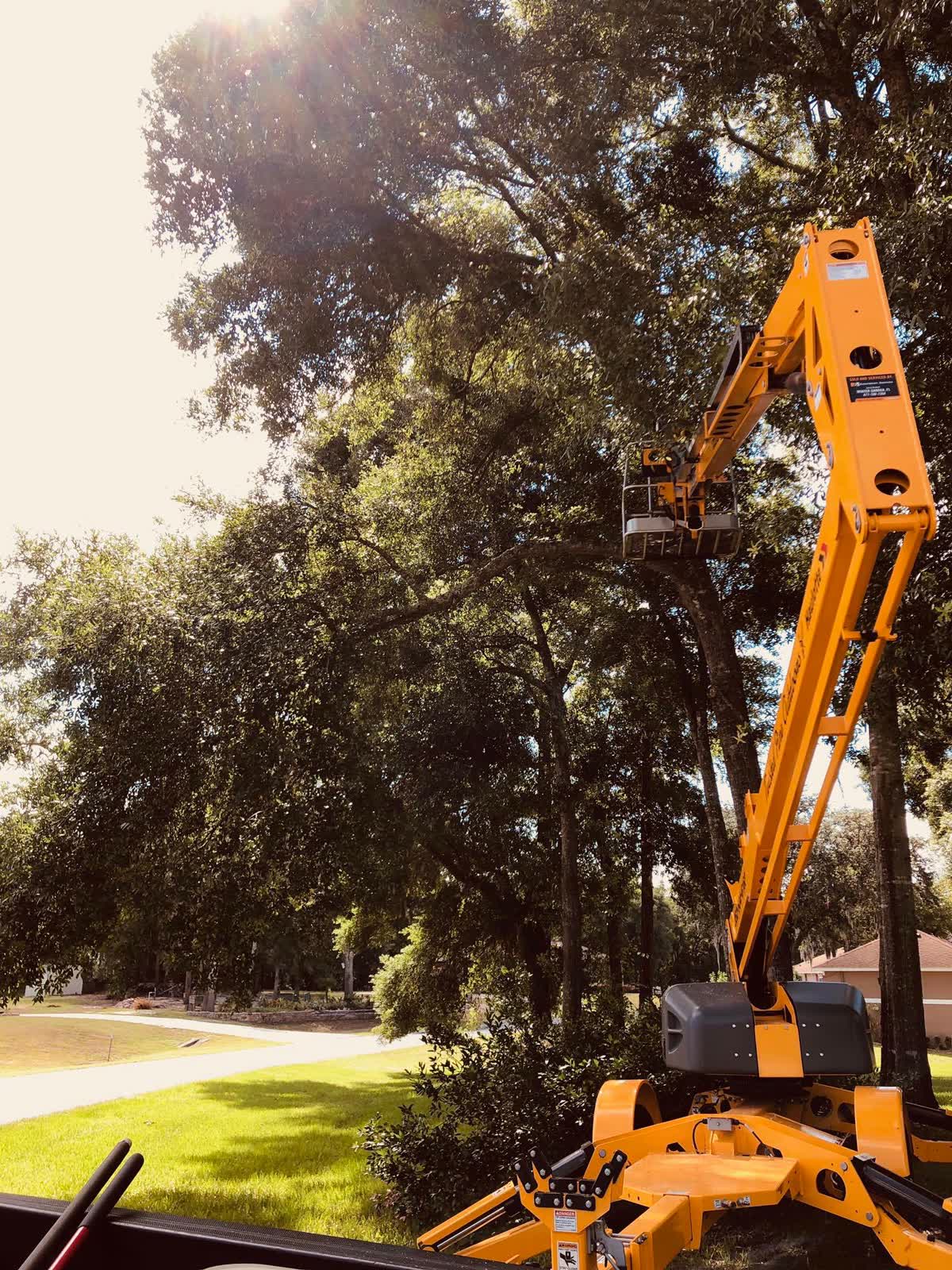
We get asked "when should I trim this?" almost as often as "how much does it cost?" — and the honest answer is that it depends on the species. Central Florida's mild winters mean we don't have a hard freeze cutoff like other parts of the country, but the trees we work on most — live oaks, laurel oaks, palms, and crape myrtles — each have their own timing that gets better or worse results depending on when you cut. None of this is about rigid rules; it's about working with how each species actually grows instead of against it.
Oaks: winter, not the peak of summer
Live oaks and laurel oaks handle pruning best during their slower, more dormant-ish stretch in late fall through winter. Wounds seal more cleanly, the tree isn't pushing energy into leaf-out at the same time it's recovering from cuts, and it's generally easier to see the actual branch structure without a full canopy of leaves in the way. That's especially true for the moss-heavy old oaks we see a lot of in Leesburg's older neighborhoods, where getting a clear look at the structure matters for planning the cut.
Heavy structural cuts in the peak of summer aren't off the table entirely, but they put more stress on a tree that's already working hard in the heat, and they can trigger a flush of soft new growth that isn't well hardened before the next round of summer storms. If a limb is a hazard, we'll deal with it whenever it needs dealing with — safety doesn't wait for the calendar — but for routine structural pruning, winter is when we'd rather be up in the canopy.
Palms: less is more, and mind the seed pods
Palms are a different animal entirely, and a lot of the "trimming" we see done to them elsewhere is honestly overdone. A palm doesn't need every brown frond gone the moment it turns color — those fronds are still feeding the tree on their way out, and stripping green fronds along with them to make the tree look tidier actually weakens it and can shorten its life. We see a lot of that instinct in HOA-heavy communities like The Villages, where "clean" sometimes gets confused with "correct." Our approach is to remove dead and clearly dying fronds and old seed pods, especially heading into storm season, without over-pruning the canopy the palm actually needs.
Timing-wise, palms can be cleaned up more or less any time of year, but doing it before June gets the heavy seed pods and loose fronds — the parts most likely to become wind-borne debris — off the tree before hurricane season is in full swing.
Crape myrtles: late winter, and please, no "crape murder"
Crape myrtles bloom on new growth, which is exactly why so many people hack them back hard every year thinking it means more flowers. It doesn't — it just means the tree spends its energy regrowing thick, weak stubby limbs instead of a natural branching structure, a look arborists call "crape murder" for good reason. A proper late-winter prune, removing crossing branches, suckers, and spent seed heads while shaping around the tree's natural form, gets you a healthier tree and just as good a bloom without the stub-and-regrow cycle.
The one date that matters most: June 1
Regardless of species, there's one deadline worth building your whole trimming schedule around: Atlantic hurricane season opens June 1 and runs through November 30. Getting canopy work done before that window — thinning dense growth, removing deadwood, clearing limbs over the roof — is the single most useful thing you can do on a schedule, because it's also when every tree company in the region gets slammed with calls. If you wait until a storm is already in the forecast, you're competing with everyone else who waited too.
We put together a full breakdown of what to check on your own trees before that deadline, and why some common "storm-proofing" advice actually backfires.
Get ahead of hurricane season
What to look for, what a pre-season assessment actually covers, and why topping a tree makes it weaker, not stronger.
Whatever the species or the season, the goal is the same one behind everything we do: prune for the tree's long-term health and structure, not just how it looks on the day we leave. If you want a second opinion on when — or whether — something in your yard needs a trim, that's exactly what our tree trimming service is for.
Not sure what your trees need right now?
Free, no-pressure quote. We'll tell you honestly whether it's the right season for the work, or whether it can wait.