Atlantic hurricane season runs June 1 through November 30, and every year in Central Florida it's the same pattern: a storm shows up in the forecast, and the calls start coming in. By then it's often too late to do the kind of careful pruning that actually helps — every tree crew in the region is booked, and the wind is already picking up. This guide is about doing the useful work earlier, when there's still time to plan it right.
Why Central Florida trees fail in storms
Most tree failures we see after a hurricane or tropical storm trace back to a handful of causes, and they're rarely random bad luck. A tree with a dense, over-full canopy catches more wind than one that's been thinned properly — think of it like the difference between an open umbrella and a solid sail. When too much of that wind load has nowhere to go, something gives: a limb snaps, or the whole tree goes over at the root ball.
Co-dominant stems are another common culprit. That's when a tree splits into two or more trunks of similar size close to the ground instead of growing one dominant leader, often with a tight, included-bark union between them instead of a strong branch collar. That union is a structural weak point, and under wind load it's a common place for a tree to split down the middle.
Root damage plays a bigger role than most homeowners expect, too. Construction work, grade changes, trenching for utilities, or even repeated soil compaction from vehicles parked under the canopy can all quietly damage a root system years before a storm exposes the problem. A tree can look perfectly healthy above ground while its anchoring below ground is already compromised.
And then there's the damage people cause on purpose, thinking they're helping. Over-lifting a canopy — stripping too many lower and interior limbs to "clean it up" — shifts weight to the outer canopy and makes a tree more top-heavy, not less. Topping is worse: cutting main limbs down to stubs forces a flush of weak, fast-growing sprouts that are poorly attached to the parent limb. Those sprouts grow quickly, but they snap off far more easily than a limb the tree grew naturally. A topped tree isn't storm-proofed — it's a tree that's been made structurally weaker, and it will need more work, sooner, for the rest of its life.
What you can check from the ground before June 1
You don't need a ladder or any special equipment to catch most of the obvious warning signs. Walk your property on a calm day and look for:
- A new or worsening lean. A tree that's always leaned slightly is usually fine; a lean that's changed recently, especially with lifted or cracked soil at the base, is a red flag.
- Dead limbs over a target. Deadwood over the roof, driveway, or anywhere you park or walk is worth having removed before it dries out further and comes down on its own schedule.
- Mushrooms or conks at the base or trunk. Fungal growth low on the tree can point to root or trunk decay that isn't visible from the outside otherwise.
- Cracks or splits in the trunk or major limbs. Even a hairline crack at a limb union is worth a second opinion — it's often where a co-dominant split starts.
- Hanging or broken limbs already caught in the canopy. A limb that broke in a past storm but never fully came down is just waiting on the next gust.
None of these automatically mean a tree has to come down. Most of the time the right answer is targeted pruning, not removal — but it's worth having someone who does this for a living take a look before you decide either way.
What a pre-season assessment covers
When we walk a property ahead of storm season, we're looking at the whole tree, not just the branches that are easy to see from the ground. That means checking the base and root flare for decay or lifting, looking up into the canopy for deadwood and weak unions, and evaluating overall structure — how the tree is balanced, whether it's been topped or over-lifted in the past, and what kind of pruning would actually reduce risk without just making the tree look "trimmed."
That's the core difference between structural pruning and topping, and it's worth saying plainly: topping a tree to "storm-proof" it is one of the most persistent myths in tree care, and it does the opposite of what people think. Real storm prep is selective thinning of the outer canopy to reduce wind resistance, removing deadwood and crossing limbs, and correcting weak unions where it's still practical — all cuts made at proper points so the tree can seal and stay structurally sound, not hacked back to stubs that regrow weaker every year.
After the storm
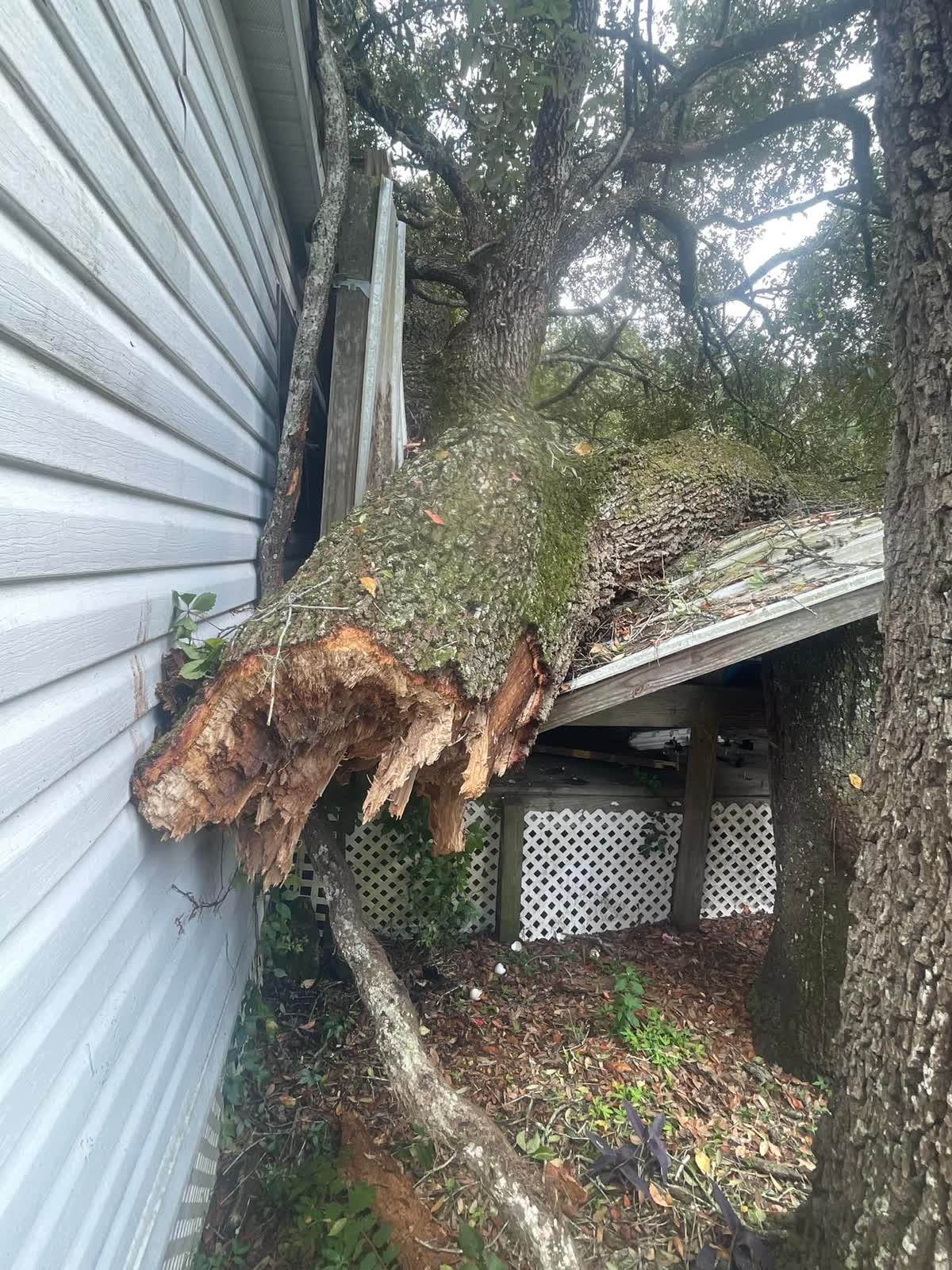
If a tree does come down, safety comes first, every time. Stay well clear until you've confirmed there are no downed power lines tangled in the branches, and don't assume a leaning or partially-fallen tree is stable — limbs and trunks under tension can release suddenly, even hours or days after the storm passes. If anything looks electrically live or structurally unstable, wait for a professional rather than working around it yourself.
Once it's safe, take photos of the damage before anything gets moved or cleaned up — the tree, the debris, and whatever it landed on or near. Those photos matter if you end up filing an insurance claim, since adjusters want to see the damage as it happened, not after cleanup. We routinely provide photos as part of emergency cleanup and removal work for exactly this reason.
From there, call your insurance carrier to start the claims conversation and call us (or another tree service) for the physical cleanup — the two conversations usually need to happen in parallel, not one after the other. See our storm cleanup page for how we work through a job like that, hazards first.
Curious what homeowners insurance actually covers?
We wrote a full breakdown of how Florida homeowners insurance typically treats tree damage and removal, including where it usually does and doesn't respond.
Frequently asked questions
Does homeowners insurance cover tree removal in Florida?
It depends on the policy and the situation. Generally, if a tree falls on a covered structure like your house, carport, or fence, homeowners insurance responds to the damage and often the removal tied to it. A tree that falls in the yard without hitting anything is usually not covered. Every policy is different, so confirm the specifics with your carrier — we cover this in more depth in our full blog post on the topic.
What time of year should I get my trees checked before hurricane season?
Late spring, ideally April or May, gives you time to schedule any pruning before Atlantic hurricane season officially opens June 1. Waiting until a storm is in the forecast usually means every tree company in the region is booked solid.
Is topping a tree a good way to storm-proof it?
No. Topping — cutting main limbs down to stubs — actually makes a tree more dangerous in a storm, not less. It triggers weak, fast regrowth that's poorly attached and prone to snapping in wind. Structural pruning that thins and balances the canopy is the safer approach.
What should I do immediately after a tree falls in a storm?
Stay away from it until you've checked for downed power lines and confirmed nothing is under tension that could snap free. Take photos before anything is moved, then call your insurance carrier and a tree service to talk through emergency cleanup.
How much does a pre-season tree assessment cost?
We don't publish a flat rate because every property is different — tree count, size, and access all factor in. A walkthrough and quote is free, so the easiest way to know is to call or text us and we'll give you a straight answer.