Storm Cleanup
Storm Cleanup
When a tree comes down on your property, safety comes first—then the real work of getting it off your house, your yard, and your mind.
After the wind stops
Safety first, then the phone calls
Once a tree is down, the first job isn't cutting—it's staying clear. Downed power lines can be tangled in the branches and impossible to spot from a distance, and a leaning or partially-fallen tree can shift or drop without warning, sometimes hours after the storm passes. A root ball that's been pulled halfway out of the ground is its own hazard too—the whole tree can settle further or roll once the wind and rain let up, not just at the moment it fell. If anything looks electrically live or unstable, wait for a professional before you go near it.
Once it's safe, take photos of the damage before anything gets moved—the tree, the debris, and whatever it landed on. From there, call your insurance carrier and a tree service, ideally around the same time rather than one after the other, since cleanup and the claims process usually need to move together.
What we handle
From hangers to trees on the house
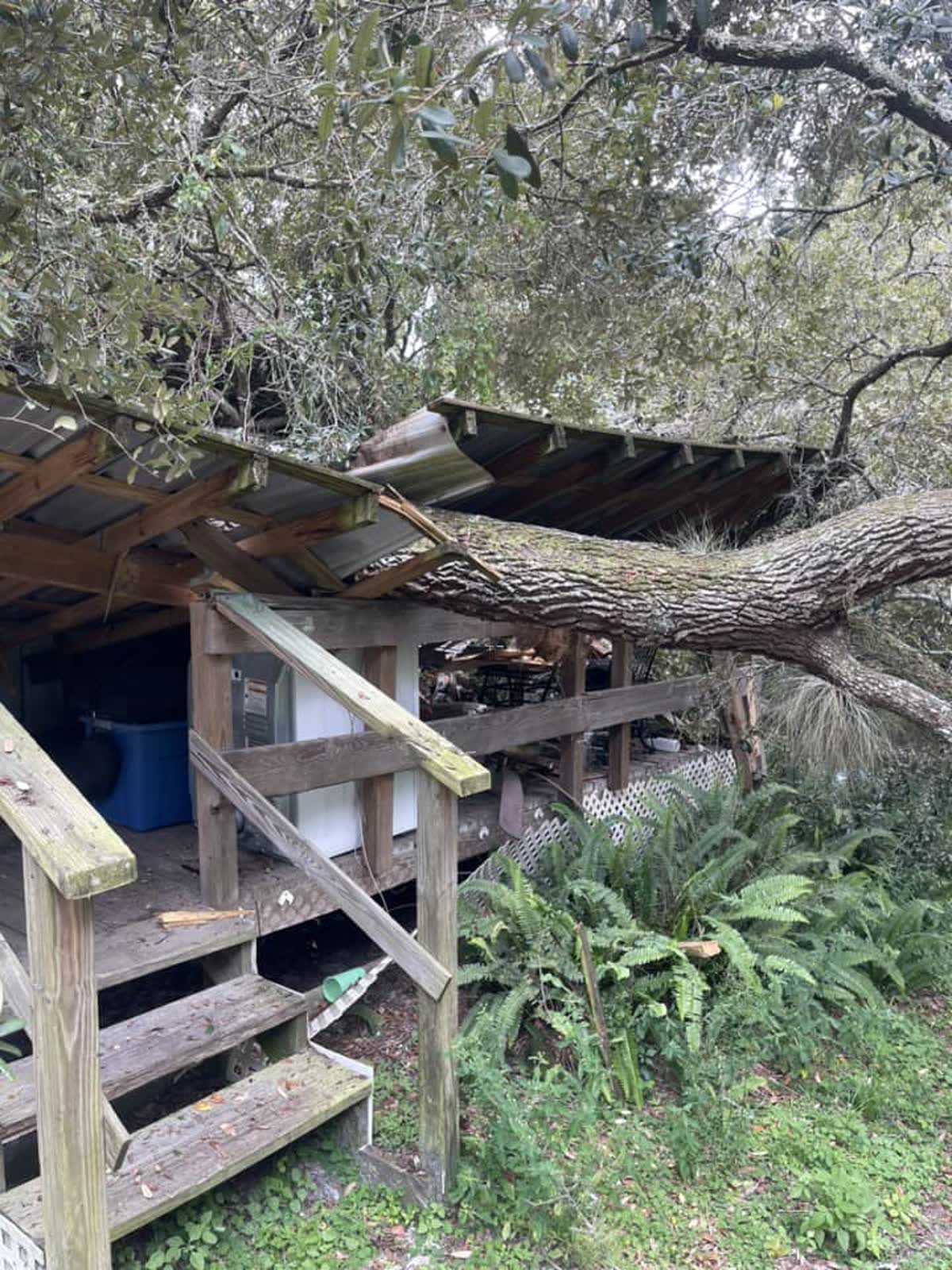
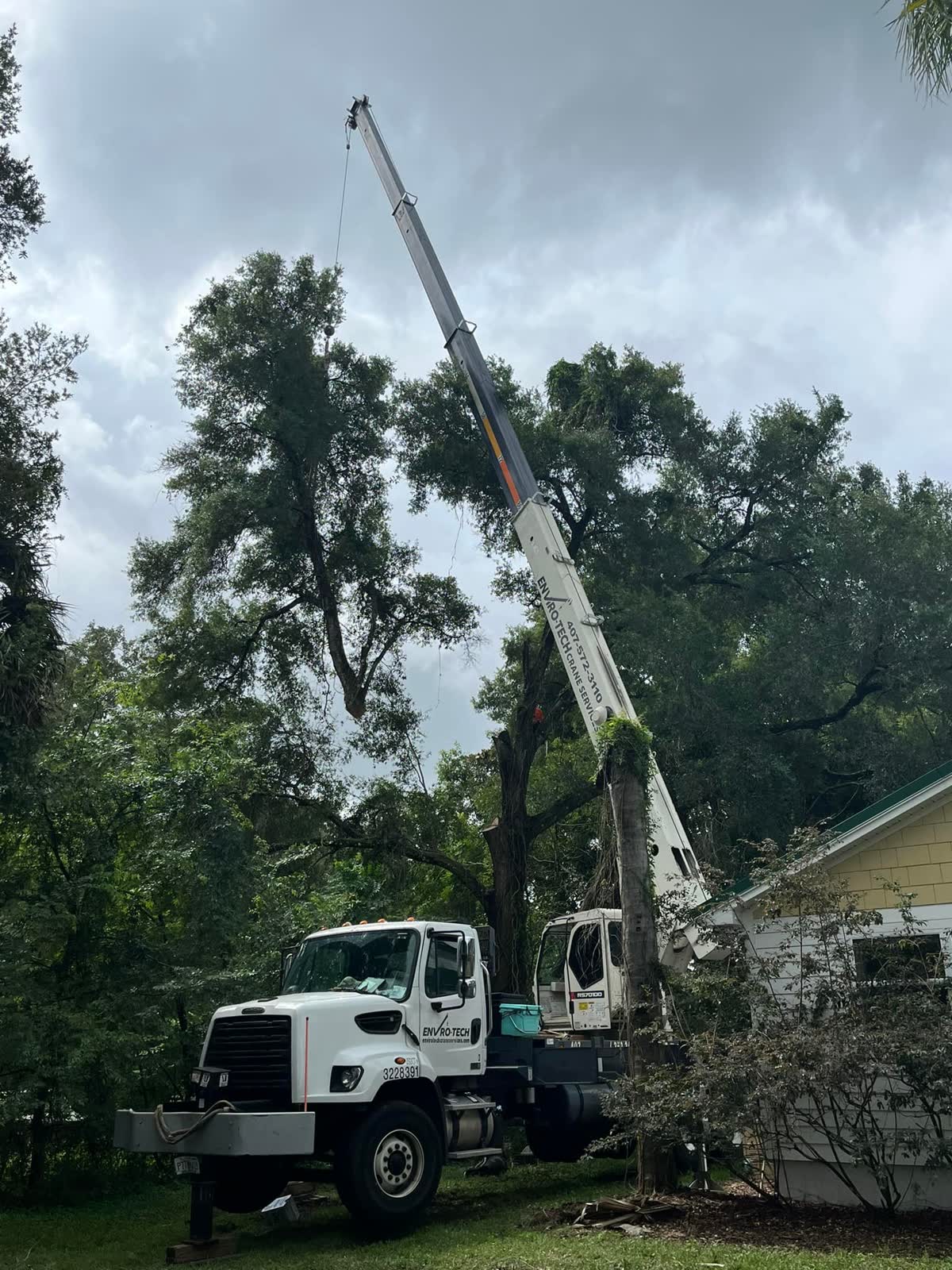
- Trees down on a roof, carport, or fence—we bring in a crane partner when the size or angle calls for it
- Hangers and leaners caught in the canopy, waiting on the next gust
- Tension-loaded limbs—wood bent or pinned under load is dangerous to cut and needs a crew that knows how it'll release
- Debris hauled off, or stacked if you'd rather keep the wood
It's not always a tree on the roof
Plenty of storm calls are smaller than that
Not every storm cleanup call is dramatic. A lot of what we do after a bad blow comes through is smaller than a full tree down—broken limbs scattered across a yard, a fence flattened by a falling branch, a shed roof dinged up but still standing. We treat those calls with the same priority order as the big ones: anything hazardous to a person or a structure first, then the rest of the cleanup on whatever timeline makes sense.
How we work a storm queue
Hazards to life and structure, first
After a storm rolls through, calls come in faster than any crew can work them. We don't pretend otherwise, and we won't promise a response time we can't back up—what we will do is be straight with you about where you sit in line, and we work the real hazards to life and property first, before anything cosmetic.
Documentation
Photos for insurance and HOA claims
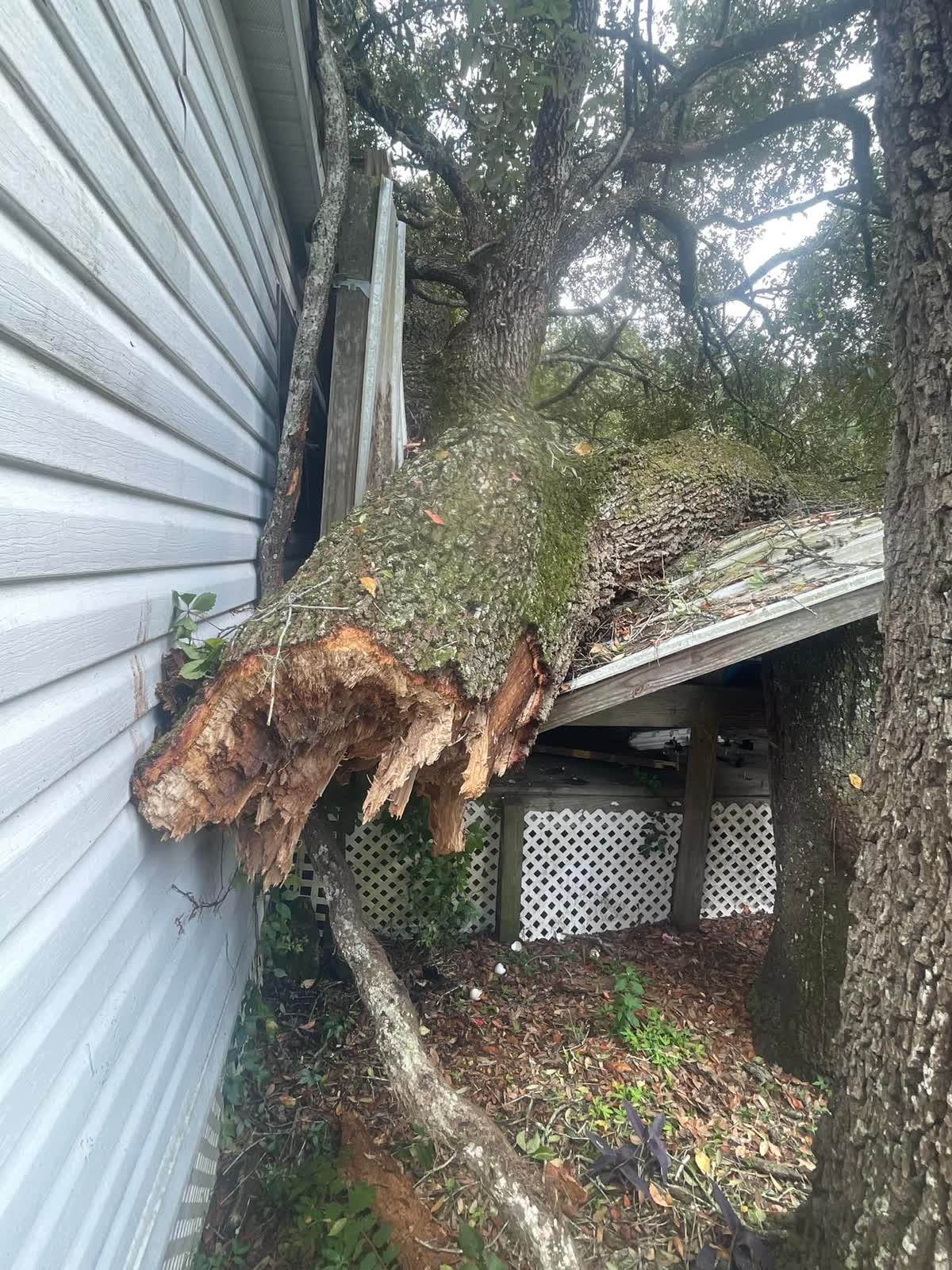
We routinely document storm damage and cleanup with photos as part of the job—the same thing we already do on tree removal work. If you're filing a claim or need something for an HOA request, just ask and we'll make sure you've got what you need.
Prep beats cleanup
The best storm cleanup is the one you never need. Our hurricane preparedness guide covers what actually makes a tree fail in high wind and what to check before June 1, and regular tree trimming is one of the best things you can do to help a healthy tree stand through the next one.
Common questions
Frequently asked questions
There's a tree on my roof—who do I call first?
Call your insurance carrier and a tree service around the same time, not one after the other. Before either call, make sure everyone stays clear of the tree until you've confirmed there are no downed power lines and nothing is under tension that could shift.
Will insurance cover it?
It depends on the policy and what the tree hit. Generally, if it landed on a covered structure like your house, carport, or fence, insurance responds to the damage and often the removal tied to it—a tree that falls in the yard without hitting anything usually isn't covered. We break this down in more detail in our full post on Florida insurance and tree removal.
Should I cut anything myself before you get there?
No—please don't. Wood that's bent, pinned, or under tension can release with enough force to seriously hurt someone, and it's often not obvious just from looking which limbs are loaded. Leave the cutting to a crew that knows how to read it.